Chapter II · The market

The market.
Measurable ROI.

Energy, water, waste, carbon and materials are rising in lockstep across Europe and the policy stack will accelerate them through 2032. The market for resource data is no longer optional.

01Operational costs
02Stakeholder demands
03Examples

The cost of resources

Costs are increasing across the board

Prices for energy, water, waste, carbon and materials are rising in lockstep across Europe - and public poilicy accelerates increase through 2032.

Commodity outliers
Brent crude−2%
Baltic Dry Index−38%
Not what consumers pay.
Index · 2010 = 100 · nominal
Resource costs across Europe, 2010 → 2032 · actuals 2010–2026 · forecast 2027–2032
EU ETS carbon allowance
+1,087%
EU landfill tax (weighted avg.)
+286%
EU combined water tariff
+106%
EU household electricity
+100%
EU construction cost index
+93%
EU retail diesel (Brent flat)
+78%
Sources · Eurostat nrg_pc_204/205 · EC Weekly Oil Bulletin · Eurostat sts_copi · ICE/EEX (EUA) · Member-State landfill schedules · IEA WEO STEPS · Baltic Exchange. Forecast layers ETS2 · CBAM · UWWTD · landfill escalators.

The trust gap

Stakeholders are demanding data

Customers, consumers, authorities and investors are all asking the same question.

Office workspace with staff
01 · Customers
70%

Higher growth for products with verified sustainability claims.

NielsenIQ & McKinsey, 2023
Shopper scanning a product
02 · Consumers
64%

Perceive greenwashing. Only 22% trust claims without verification.

Capgemini · Deloitte
Government chamber session
03 · Authorities
81%

Of EU adults back stricter climate rules (CSRD · CBAM · ETS2).

EIB Climate Survey, 2024
Meeting room behind branded glass
04 · Investors
83%

Of companies struggle to access accurate emissions data.

GHG Protocol · EcoVadis 2025
What every stakeholder is really asking for
ReportsAuditsRaw dataCertificatesVerifications

Profit - by focusing on avoidable costs

Story of a mid-cap industrial company · from €10M resource spend in 2026 to €16.2M in 2032.

Voices from the field

Customers see it too: in cost, in carbon, in time

Real numbers from operators across construction, shipping, retail, hotels, beverages & the public sector.

−20%
cost per kilo of waste, YoY
57 → 83% sorting · 33 → 77% recycling

“A complete game changer. We publish our waste ratio at the top of our website.”

Bergur Helgason · Quality Manager
−23.5%
CO₂e per ton of cargo transported
Real-time KPI monitoring

“Real-time monitoring exposes environmental impact and the non-financial factors in our value chain.”

Eyþór H. Ólafsson · Eimskip
200 hrs+
saved on the first DMA process
DKK 300,000 saved

“Foundational for our first DMA, saved valuable time and eliminated the need for external advisors.”

Rasmus Jørgensen · Head of ESG
SBTi approved
emission targets validated by Science Based Targets initiative
Scope 1 & 2 automated

“Klappir’s data connections save time during statement periods, a key factor in getting targets approved.”

Thora Rut Jonsdottir · Dir. of Sustainability
2019
carbon-neutral operations since
2040 target · loans & investments

“Better data, measurements and comparisons. We set the goal higher every year.”

Kristrún Tinna Gunnarsdóttir · Head of Strategy & Sustainability
Real-time across stores
energy & waste data direct from service providers
YoY improvement across measures

“The platform collects real-time data and calculates the carbon footprint of the operation.”

Jón Þórir Þorvaldsson · ESG Lead
Asset-level
emissions tracking across the municipality
First sustainability report · 2021

“Easy access to detailed emissions for each asset, a great comparison to track our journey to carbon neutrality.”

Anna Karen Sigurjónsdóttir · Sustainability Specialist
Since 2018
NASDAQ ESG guidelines, published
Measurable waste reduction

“The basis for us to set measurable goals when it comes to reducing waste.”

Guðrún Eva Gunnarsdóttir · CFO

Competitive advantage

Securing market leadership through three structural advantages

Competitors cannot easily steal market share because Klappir is protected by deep software integration, an interconnected supplier network, and pre-approved data trust, advantages that take years to build from scratch.

01 · Replacement

Connection to customers.


Deeply connected
Data integrations made, data enhanced and stored, digital models built and it's auditability over time builds stickiness.
Painful to rip out
Replacing Klappir means breaking every data connection and starting over.
High customer loyalty
Once a company plugs into Klappir, they stay.
02 · Replication

Network of customers.


Connected ecosystem
Large number of suppliers and businesses are already linked to Klappir.
Interconnected data sharing
When a supplier connects, its data instantly auto-populates for dozens of corporate buyers.
Uncopiable ecosystem value
A competitor's product has zero connected network data on day one.
03 · Rebuilding

Deep trust in the data.


Trusted data
The data acts as a secure ledger that cannot be tampered with.
Instant approval
Auditors already trust Klappir's formats, saving customers months of manual verification.
Massive time barrier
Rebuilding equivalent models takes years of configuration.
The compounding moat
Competitors cannot easily displace Klappir because the value grows with every new connection. Klappir continuously extends it's data capabilities, enhancing existing data with the latest scientific knowledge, technology and outcomes. The ability to mass-produce data-sharing capabilities through strict harmonised channels is a feat hard to replicate.

The Klappir distribution strategy

The Klappir flywheel distribution model

Problem
Organisations need data from one another.
Solution
Klappir enables easy sharing of important data between organisations unlocking new margins.
Five stages, in spin order
1Sign up - one data stream free.
2Measure - surface the first saving in live data with help from Embla.
3Expand - pay to add more data sources.
4Optimize - Embla act continuously, savings compound.
5Stream - share data, become the next hub ↻ loop restarts

Driving through existing value chains

Pillars of the go-to-market strategy

01

Geographical markets

Enter each market by lighting up its core data integrations first — utilities, ports, registries — so every local customer plugs into rails that already exist.

02

Partner-focus

Grow through partners' existing business networks — advisors, consultants, industry bodies — who introduce Klappir to customers they already serve.

03

Network effect

Every data integration serves all customers at once. Supply-side connections compound — the next customer in a market onboards with zero new pipework.

04

Instant wins in freemium

A free first data stream, then Embla surfaces a concrete saving in minutes — the instant win that turns a sign-up into a paying, expanding customer.

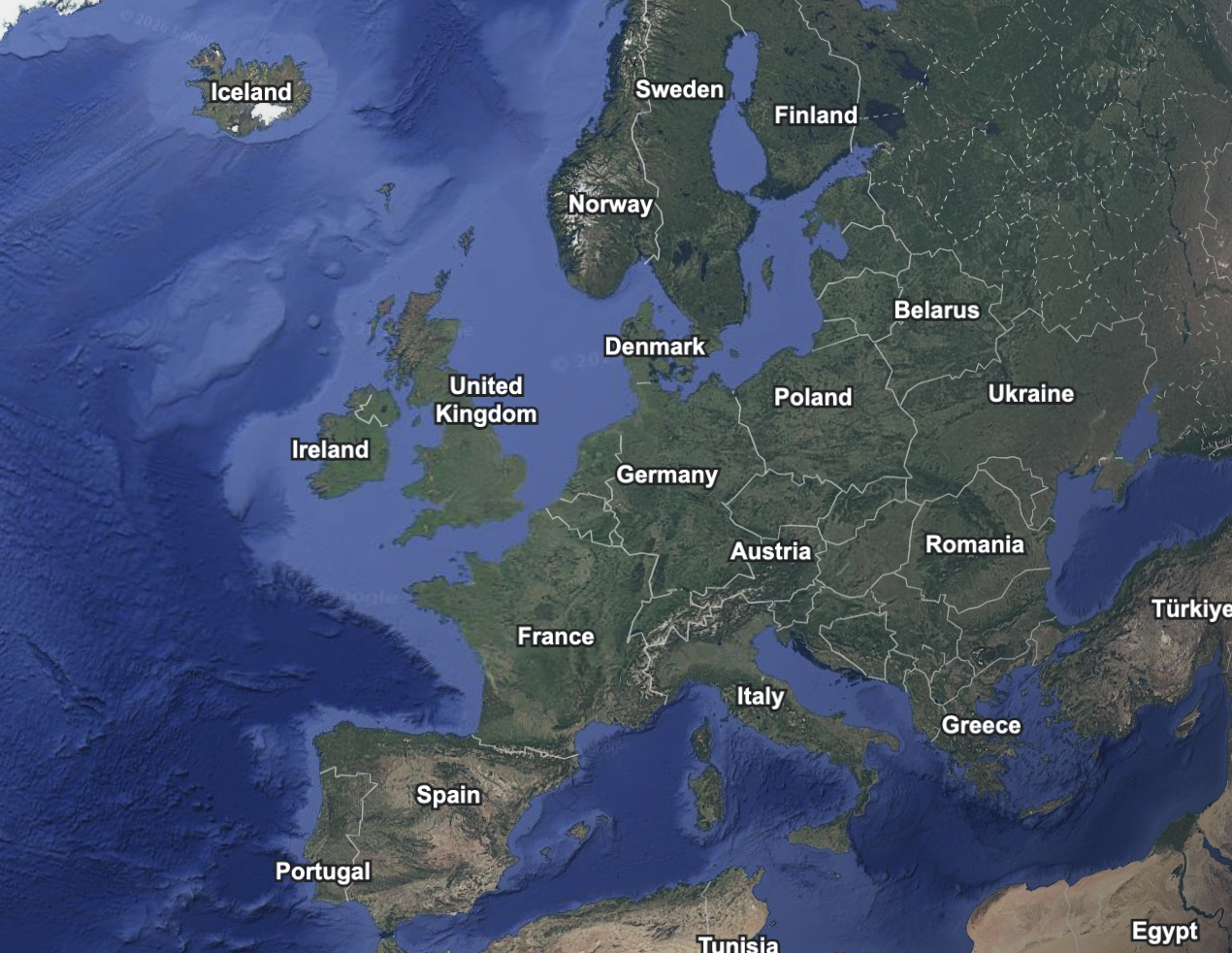
Map of Europe and the North Atlantic showing Klappir's market reach

Go-to-market in action

A partner introduces a new customer to the network

An existing partner already runs its hub on Klappir. When it introduces a customer it already serves, that newcomer instantly inherits live data from suppliers already on the platform — and the flywheel turns again.

See it live
network.klappir.com
Network demo

Built on the operations of leading enterprises

800+installations
30+countries
IKEA
Icelandair
Toyota
Rio Tinto
Eimskip
Reykjavík
Icelandic Coast Guard
66°North
Síminn
Ölgerðin
Blue Lagoon
Íslandsbanki
Kópavogsbær
Kerecis
Brimborg
ÞG Verk
Asetek
Reykjanesbær
Hagar
Sybo
Dilling
Aasted
The Whole Company
Fayard
Andersen & Heegaard
Polar Seafood
Adina
Kurhotel Skodsborg
Brøchner Hotels
Guldsmeden Hotels
Sinatur
C.W. Obel
Brønnum
Nic. Christiansen Gruppen
Semco Maritime
Give Steel
MS Byg
…and many more
Operations across Industrial · Public sector · Retail · Hospitality · Maritime · Construction · Aviation · Food

Next chapter

Where the market goes next

AI that turns this data into automatic, measurable action, demonstrated live across real customers.

See Future & AI Request more data